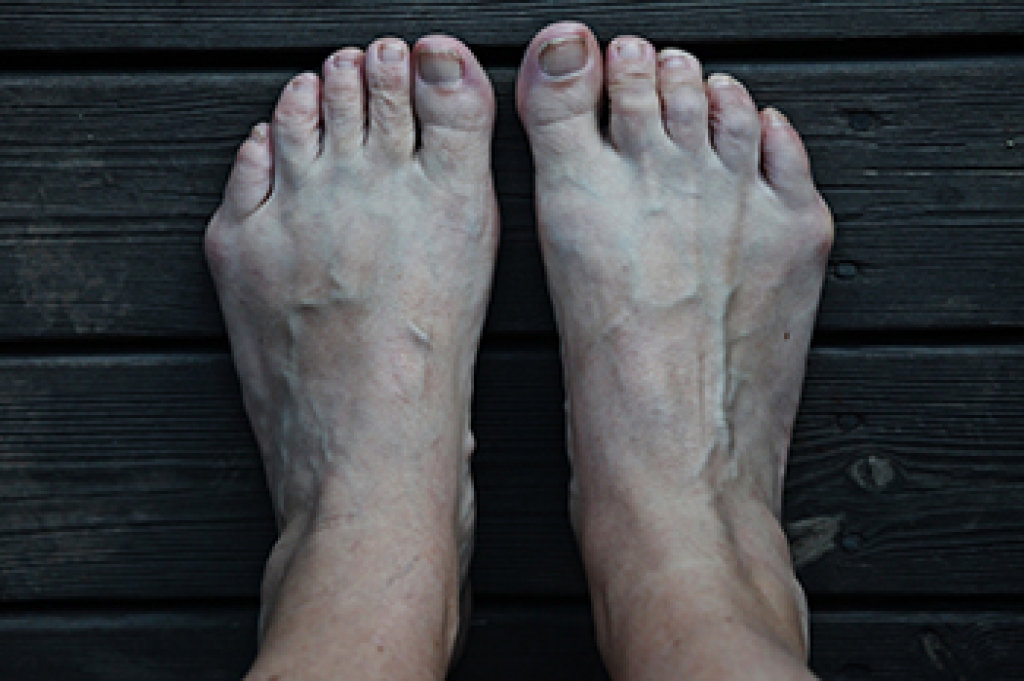
A bunionette, also called a tailor’s bunion, is a bony prominence that develops along the outer edge of the foot at the base of the little toe. It occurs when the fifth metatarsal bone shifts outward or the little toe angles inward, creating a noticeable bump. Symptoms include redness, swelling, and pain while wearing shoes. Some people experience tenderness while walking or standing for extended periods. Although a bunionette may develop slowly, friction and pressure make the area increasingly uncomfortable.
Bunionettes develop because of intrinsic and extrinsic factors. Intrinsic causes involve the structure of the foot itself, including inherited bone shape, abnormal alignment, and differences in how the foot bears weight. These structural features may increase pressure along the outside of the little toe. Extrinsic causes come from outside the body, particularly footwear that squeezes the toes or rubs against the bony prominence. Narrow shoes and high heels can worsen existing irritation by forcing the foot forward. People with a family history of bunionettes or foot alignment problems may be at greater risk.
The location of a bunionette makes it especially sensitive to shoe pressure. The outer forefoot often rubs against the shoe, leading to thickened skin or a painful corn. Symptoms may become more noticeable during exercise or after spending hours on your feet. Certain foot shapes increase the likelihood of developing this condition. Wearing poorly fitting footwear may accelerate discomfort. Choosing shoes with a wide toe box can reduce pressure and help protect the affected area.
A podiatrist examines your foot, assesses bone alignment, and uses X-rays when needed to determine the severity of the bunionette. Treatment options include wider shoes, protective padding, or medication to ease inflammation. Severe cases that do not improve with conservative care may require surgery. If you have a bunionette that is causing pain, it is suggested that you consult a podiatrist for an accurate diagnosis and appropriate treatment.
If you are suffering from bunions, contact one of our podiatrists of Foot and Ankle Center. Our doctors can provide the care you need to keep you pain-free and on your feet.
What Is a Bunion?
A bunion is formed of swollen tissue or an enlargement of boney growth, usually located at the base joint of the toe that connects to the foot. The swelling occurs due to the bones in the big toe shifting inward, which impacts the other toes of the foot. This causes the area around the base of the big toe to become inflamed and painful.
Why Do Bunions Form?
Genetics – Susceptibility to bunions are often hereditary
Stress on the feet – Poorly fitted and uncomfortable footwear that places stress on feet, such as heels, can worsen existing bunions
How Are Bunions Diagnosed?
Podiatrists often perform two tests – blood tests and x-rays – when trying to diagnose bunions, especially in the early stages of development. Blood tests help determine if the foot pain is being caused by something else, such as arthritis, while x-rays provide a clear picture of your bone structure to your provider.
How Are Bunions Treated?
- Refrain from wearing heels or similar shoes that cause discomfort
- Select wider shoes that can provide more comfort and reduce pain
- Anti-inflammatory and pain management drugs
- Orthotics or foot inserts
- Surgery
If you have any questions, please feel free to contact our office located in Egg Harbor Township, NJ . We offer the newest diagnostic and treatment technologies for all your foot care needs.
